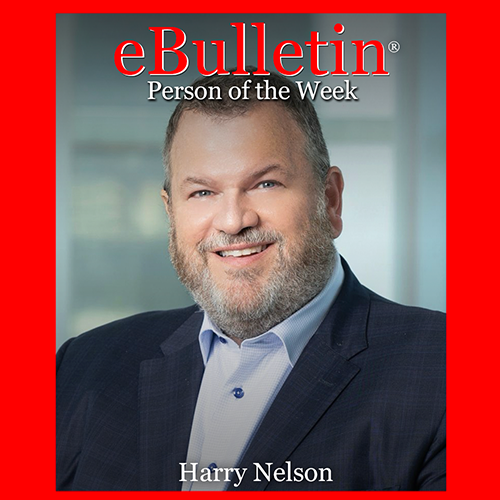
Harry Nelson is a healthcare attorney, author, speaker, and policy commentator in his 3rd decade as a nationally recognized voice on addiction, healthcare policy, and the future of medicine and behavioral health. He is the author of several books, including The United States of Opioids: A Prescription for Liberating a Nation in Pain.
Q. If you are in recovery, what was your drug(s) of choice and when is your sobriety date?
A. I am not personally in recovery (if I was, it would be for disordered eating more than alcohol or drugs), but my life and work have been deeply shaped by people in recovery, by families affected by addiction, and by the urgent need to build a more effective response to addiction.
Q. Do you think addiction is an illness, disease, a choice, or a wicked twist of fate?
A. I think of addiction as a disease, but one that has been misunderstood because it expresses itself behaviorally, socially, spiritually, medically, and legally all at once.
Q. Where are you from and where do you reside now?
A. I was born in Rio de Janeiro, Brazil, but I grew up in suburban Detroit. I lived in Hawaii after law school and then Chicago. I’ve been living in L.A. 25 years.
Q. What is one word you would use to describe yourself?
A. Curious.
Q. If you ever retire, would you prefer to live by the ocean, lake, river, mountaintop, desert, or penthouse?
A. Ocean. I feel at peace in and near the water.
Q. How do you measure success?
A. I measure my success by whether I helped make something clearer, fairer, or more workable than it was before I got involved.
Q. What is your biggest pet peeve?
A. Entitled people. And people who allow themselves to be useful idiots for terrorists.
Q. If you could give advice to your younger self what would it be?
A. Trust your instincts earlier. Don’t let fear or uncertainty hold you back from acting.
Q. Which living person do you most admire?
A. My parents. For all their craziness, they taught me how to be a mensch and shaped me into the person I’ve become.
Q. What major event or realization shaped who you are?
A. I had a moment of truth about 20 years ago where I tried to convince a client who already had 2 good lawyers NOT to hire me. He said: “I know they’re good, and I also know you’re good, but the difference is that they leave me cold, and when I’m with you, I feel how much you’re in this with me, and my anxiety lifts and I can function.” It made me realize that it was necessary but not sufficient to do “the work,” and my calling was to put my heart into being fully “in it” with everyone I serve. That insight drove me to everything meaningful I’ve accomplished.
Q. What sound or sounds do you most remember from your childhood?
A. I remember and think often of Friday nights at the Shabbes table: the blessings, the conversations, the songs.
Q. What’s your concept of a Higher Power?
A. I believe in being faithful (having “Emunah”) to G-d. For me, this means beginning every day in gratitude with a focus on “Ein Od Milvado,” i.e. “There is no reality other than G-d.” I believe the essence is to constantly be reminded that I am not the center of the universe and humility is a necessity not a virtue.
Q. What is your Astrological sign?
A. On the Gregorian calendar, Aquarius. But on the Hebrew calendar (which I use for this purpose), Capricorn.
Q. Who is your favorite celebrity in recovery?
A. I will always owe a huge personal debt of gratitude to Lisa Marie Presley of blessed memory who agreed despite misgivings about her privacy to write the foreword of my book and ultimately went further in agreeing to write about her own addiction. I think anyone who uses their visibility to reduce stigma and encourage people to seek help is a hero.
Q. What books are you reading now?
A. I do a bunch of weekly Hasidic text study (Rebbe Nachman of Breslov, Tzadok HaCohen, Netivot Shalom) week to ground myself and stay centered. I’m trying to get through Yuval Harari’s new-ish book, Nexus, on the history of information network but need more open space before the summer is over.
Q. Who is your favorite film director?
A. Sophia Coppola.
Q. Are you binge watching any TV series?
A. Narcos
Q. What is your favorite App?
A. WhatsApp. Runner up: Granola.
Q. Who is your favorite performer, living or dead?
A. Avett Brothers.
Q. Who are your heroes in real life?
A. People who refuse to give up. People who tell the truth when it’s easier not to.
Q. What are some of the most memorable songs in your life?
A. Landslide (Fleetwood Mac); Mr. Brightside (The Killers); Superman (REM)
Q. What is your favorite city?
A. Jerusalem.
Q. What are five things you always carry with you (not including cell phone, keys, wallet, or lipstick)?
A. Pen. Something to write notes on. A card that reminds me “Ein Od Milvado” (Nothing else besides G-d). AirPods. And a question I’m obsessing about.
Q. What is the best and or worse piece of advice someone has given you?
A. Best-trust your judgement but test your assumptions.
Worst-stay in your lane. Most of the good work I’ve done has happened by crossing beyond my “lane”.
Q. What is the best piece of advice you’ve given someone else?
A. Don’t wait until a crisis to tell the truth about what isn’t working.
Q. What is your most treasured possession?
A. My credibility.
Q. What do you value most in a friendship?
A. Honesty, loyalty, humor and the ability to have a real conversation.
Q. What do you consider your greatest achievement?
A. Helping move healthcare conversations from blame toward solutions. In the addiction space, I am proudest of work that helped people see the opioid crisis not simply as a story about bad choices, but as a complex failure of medicine, policy, regulation, commerce, and compassion.
Q. What is your favorite compliment to receive, and why?
A. “You helped me understand things differently.” I feel a sense of victory when I get this.
Q. What is your biggest fear?
A. That we will continue to mistake punishment for healing in areas where people need treatment, structure, accountability, and hope.
Q. Where do you go when you’re seeking solitude?
A. My office is in Westwood Village, so I go for a walk around UCLA campus always going through the Botanical Garden.
Q. If you could wake up tomorrow having gained any one quality or ability, what would it be?
A. I am still working on trying to be a better listener.
Q. What would constitute a “perfect” day for you?
A. An hour plus for a workout that pushes me to my physical limit. An hour for meditative prayer time. Some meaningful work with a challenging problem to clarify. Time with my wife, my kid and people I love. Enough quiet at the end of the day to think.
Q. What is your biggest regret?
A. That it took me so long to realize how much pain people around me were carrying quietly.
Q. What is the greatest risk you’ve ever taken?
A. I built my practice around trying to answer the hardest risk-related legal questions no one else was able or willing to answer. I regularly feel like I’ve stuck my neck out for my clients even at the risk of burning relationships I’ve built with regulators in the name of problem solving
Q. Which living person do you most despise?
A. I refuse to give anyone evil my attention or energy. We live in an era of opportunists who propagandize in the name of hate, but I think we let them win when we give them our attention.
Q. What is something you’ve learned about yourself in the last six months?
A. I’ve learned I have more energy to build new things than to worry about preserving the status quo.
Q. What is something you are currently curious about?
A. I’m curious when our politics will move off the polarization towards a problem-solving middle. I’m curious how healthcare will adapt to AI and longevity medicine. I’m curious what tomorrow will bring.
Q. What do you love most about yourself?
A. The fact that I come to work every day, with a genuine curiosity about what I can learn today. And my refusal to accept that hard problems are unsolvable.
Q. What is your greatest extravagance?
A. If this wasn’t for a recovery publication, I *might* admit to a penchant for heavily peated whiskeys. Turning off my phone and all electronics for 25 hours every Friday night in favor of time with friends and family and for spiritual connection.
Q. When did you realize you were a grown-up?
A. Probably when I realized that people were coming to me not just for answers, but for judgment.
Q. How important are your pets to you?
A. I grew up with cats and always wanted a dog. I was so happy at 26 when I got a Bubba, an amazing yellow lab. But after he died, my wife has been vetoing another dog.
Q. Which words or phrases do you most overuse?
A. “100%”. I cringe at how often I say that. As much as I tried to avoid over-used lawyer words like “guard rails” and “circle back,” I have a closet full of them.
NEWS YOU CAN USE
Subscribe Today! The Addiction Recovery eBulletin is your best source for current news, information and opinions about the issues that matter to you most. Serving the treatment industry, recovery community and health and wellness professionals.