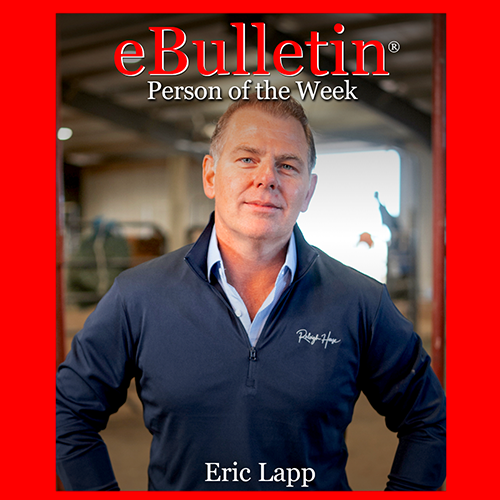
Eric Lapp is the Founder and CEO of The Raleigh House, a Colorado based behavioral health organization he established more than 17 years ago. Eric combines lived experience with entrepreneurial leadership to build scalable, whole person behavioral health programs serving clients from Colorado and across the United States.
Q. If you are in recovery, what was your drug(s) of choice and when is your sobriety date?
A. I started drinking when I was 13, and that quickly led to stimulants at 16. I became heavily addicted. When I was not using stimulants I would always go back to alcohol. Sobriety Date was July 18th, 2008.
Q. Is there anything special in your sobriety toolkit that helps keep you sober?
A. Yes, a durable commitment to never put drugs and alcohol into my body. I made a decision and that decision never falters.
Next is a durable commitment to never entertain the thought of drugs or alcohol for even a fraction of a second. A strong spiritual connection to God. Staying humble.
Constantly taking care of my mental health and a strong recognition that some days are going to be tough and some days are great and to tolerate both.
I found something that I’m highly passionate about and became relentless in maintaining my efforts toward that. I’m able to give back and help other people and have been where they are.
Eating healthy, exercise, plenty of rest, honesty, integrity.
Q. Do you think addiction is an illness, disease, a choice, or a wicked twist of fate?
A. I’ve been asked this question many times, and my answer is always the same: addiction can come from a million different places. Sometimes it’s one identifiable source; other times it’s a combination of many.
It can be a disease, and it can also involve choice. For some, there is a genetic predisposition or what feels like a twist of fate, one too many nights out that eventually turns into addiction. For others, it may stem from environmental stressors, attachment wounds, traumatic experiences, or even something as subtle as an early life influence. There can be biochemical imbalances in the brain and body, mental health disorders, grief, shame, or the loss of a relationship or loved one. Even gut health and what many describe as a spiritual malady can play a role.
Substance abuse can emerge from countless different factors. But I do believe that after proper assessment, treatment, and a strong recovery plan, it ultimately becomes a choice. That choice requires a clear and unwavering commitment. One that cannot be contaminated by doubt or self delusion.
Q. Where are you from and where do you reside now?
A. I was born at Denver General Hospital in Colorado and still live in Denver.
Q. What is one word you would use to describe yourself?
A. Tenacious.
Q. Describe how you came to your “rock bottom” point.
A. Although I had a few overdoses that landed me on life support, numerous hospital visits, loss of any reasonable l resources, desperation, and a life that was unrecognizable, rock bottom did not come till the final weeks before I quit drinking and using.
Two weeks before my sobriety date, I had a thundering feeling in my chest and went to the hospital. A doctor told me I was going to die (soon) if I didn’t make a change. The doctor recommended an immediate intervention and a 90-day treatment program, which I refused. I left the hospital and was doing the same thing within moments of leaving the hospital. A week after leaving the hospital I came down with the same thundering pain in my chest. I couldn’t breathe and I climbed the stairs on my hands and knees to the bedroom. I fell back on the ground and lost my awareness. I saw bright lights illuminating the corner of the room. At that moment, I knew I was being given a choice to live and the awareness that I wasn’t going to survive any longer if I not made a different choice. I made the choice to live.
Q. How do you measure success?
A. I’ve always resonated with something Jordan Peterson said: Don’t measure yourself against the next person. Measure yourself against who you were yesterday.
Success, to me, isn’t about comparison, it’s about growth. It’s about becoming a little more; more disciplined, a little more aware, a little more aligned than I was the day before.
Success is also deeply internal. It’s a feeling of contentment and peace. It’s knowing I’m living in integrity with my values. And ultimately, it’s having the freedom financially, emotionally and spiritually to give back in meaningful ways.
When I can look back and see progress, feel grounded in who I am, and help others along the way, that’s success.
Q. What is your biggest pet peeve?
A. Ignorance.
Q. If you had an extra million dollars, which charity would you donate it to?
A. A foundation that supports children who lost their parents at a young age or whose parents couldn’t care for them and were placed for adoption ensuring they are cared for until they’re adopted into healthy families.
Q. Who has been the biggest influence throughout your life?
A. Definitely my Dad, Wayne.
Q. If you could give advice to your younger self what would it be?
A. That life is hard . . . And . . . you’re going to be okay. You’re going to figure it out.
And that you are perfect in every way, and you are loved even if you can’t see it or feel it. That you are no less than and that love is all around you.
Q. Who made you feel seen growing up?
A. That’s a tough question. When I was young, I didn’t feel I had value or that I belonged, even though I had a nurturing and loving family.
I developed charm and playfulness in order to be seen and recognized.
It took me until my 30s to fully understand how much my mom and dad loved me. I just couldn’t see it when I was younger.
My parents, they saw me but understanding that I was seen by them would not come till years later.
Q. What do you love most about living sober?
A. That I can see clearly and get to live my mission and purpose. I get to see my daughter most days and I am able to give back. I am able to cultivate the relationships that are important to me. I am able to take advantage of what life has to offer. I have a choice.
The feeling of the lights come on for people in early recovery, when the heaviness lifts. I get to see people struggling with substance abuse and severe mental health disorders begin to recover and feel better. It’s quite magical.
Q. What’s your concept of a Higher Power?
A. My understanding of a Higher Power isn’t confined to one tradition. It draws from religion, philosophy, science, quantum physics, and metaphysics. For me, spirituality and being a good human being are inseparable. The Higher Power is both universal and deeply personal, an ever present force moving us toward growth, awareness, and compassion.
Q. Who is your favorite celebrity in recovery?
A. Robert Downey Jr.
When I was younger, I idolized him in Less Than Zero. That movie glamorized substance abuse for me. It made it look interesting, rebellious, and glamorous. The perception that I had from that movie shaped how I viewed addiction. To see Robert Downey Jr. recover from his own personal struggle meant the fantasy that I had of what substance abuse looked like wasn’t real and that I too had a chance to recover.
Q. What book(s) have you read more than once?
A. The Science of Mind by Ernest Holmes.
Q. What books are you reading now?
A. Poor Charlie’s Almanack by Charles Munger. Sydney Sheldon, The stars shine down.
Q. If you were giving a dinner party for your 3 favorite authors, living or dead, who would they be?
A. Jim Rohn, Ernest Holmes, Napoleon Hill.
Q. What is your favorite App?
A. ChatGPT.
Q. Who is your favorite performer, living or dead?
A. Blackie Lawless (W.A.S.P.). Johnny McBee (The Browning). Bryan Ferry ( Roxy Music ) . Dave Gahan (Depeche Mode). Ivan Moody (Five Finger Death Punch).
Q. What are some of the most memorable songs in your life?
A. Wasp (Wild Child).
Q. What is your favorite city?
A. Oslo, Norway.
Q. What is your favorite cuisine?
A. Steak. I enjoy high quality restaurants. I thoroughly enjoy eating out.
Q. What are five things you always carry with you (not including cell phone, keys, wallet, or lipstick)?
A. Spirit. Memories. The love that I have. The love that I’ve had. The love that I have given.
Q. What is the best and or worse piece of advice someone has given you?
A. My dad, Wayne, told me I could do anything with my life that I wanted.
Dr. Naram told me I could do anything if I believed.
Dr. Norm Shealy told me I didn’t need to be intimidated by astrophysicists, neuroscientists, or scientists in a room because I had a degree in life, and that experience mattered.
Q. What is the best piece of advice you’ve given someone else?
A. Believe in yourself.
Q. What is your most treasured possession?
A. My dad’s watch.
Q. What do you value most in a friendship?
A. Depth and mutual understanding.
Q. What do you consider your greatest achievement?
A. My greatest achievement is overcoming and tolerating adversity.
Looking back, everything I went through shaped my life into being able to do what I do now; building a remarkable organization that treats substance abuse and mental health disorders throughout Colorado and Montana.
I’m proud to integrate so many disciplines, philosophies, and modalities to treat depression, trauma, anxiety, substance abuse disorders, PTSD, and other mental health conditions.
When I decided that The Raleigh House was my life’s mission and purpose, that’s when it began to grow. We are able to help and serve so many more people.
Q. What is your biggest fear?
A. Dying with regret.
Q. What would constitute a “perfect” day for you?
A. A long drive, whether pushing a Porsche Cup car at Sebring International Raceway, inches from other competitors and driving on edge, or a drive on Northern Norway’s highways along the crashing sea, through fjords, through a blizzard, camping in a cozy van. It’s the adventure, the experiences, and that feeling of being fully alive that make a perfect day for me.
Q. What is your biggest regret?
A. I wish that I would have lived more fully, younger. I am now in a place where I am living my life fuller, deeper and with more meaning.
Q. What is something you are currently curious about?
A. The Arctic Circle and exploring Norway. The effects of hyperbaric chambers in treating mental health disorders. Innovative treatments for Parkinson’s disease. Scaling high growth organizations and leadership.
Q. What do you love most about yourself?
A. I love how much I enjoy adventure and new experiences. My willingness to try new things and my connection to animals.
NEWS YOU CAN USE
Subscribe Today! The Addiction Recovery eBulletin is your best source for current news, information and opinions about the issues that matter to you most. Serving the treatment industry, recovery community and health and wellness professionals.