



TUTANKHAMUN JUNKIE? –
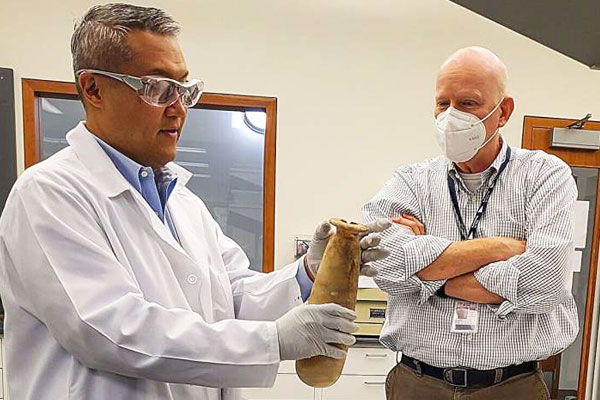
Nov. 12, 2025 – Examination of an ancient alabaster vase in the Yale Peabody Museum’s Babylonian Collection has revealed traces of opiates, providing the clearest evidence to date of broad opium use in ancient Egyptian society.
The finding suggests that similar ancient Egyptian alabaster vessels—all made of calcite mined from the same quarries in Egypt—including several exquisite examples discovered in the tomb of Pharaoh Tutankhamun—could also contain traces of ancient opiates, said Andrew J. Koh, YAPP’s principal investigator and the study’s lead author.
“Our findings combined with prior research indicate that opium use was more than accidental or sporadic in ancient Egyptian cultures and surrounding lands and was, to some degree, a fixture of daily life,” said Koh, a research scientist at the Yale Peabody Museum. “We think it’s possible, if not probable, that alabaster jars found in King Tut’s tomb contained opium as part of an ancient tradition of opiate use that we are only now beginning to understand.”
The study, published in the Journal of Eastern Mediterranean Archaeology and Heritage Studies, is coauthored by Agnete W. Lassen, associate curator of the Yale Babylonian Collection, and Alison M. Crandall, YAPP’s lab manager.