


NEW IDEAS ARE HIP –
Dec. 1, 2025 – I was drawn to family medicine even before medical school. My background was in public health, and I spent a summer in Santiago, Chile, where I was paired with a family doctor in their public health department. Watching her, I saw how deeply connected the delivery of care is to the environments that keep people healthy. I worked in mobile rural clinics across the city and became immersed in the realities of people’s lives and the barriers they face in accessing care.
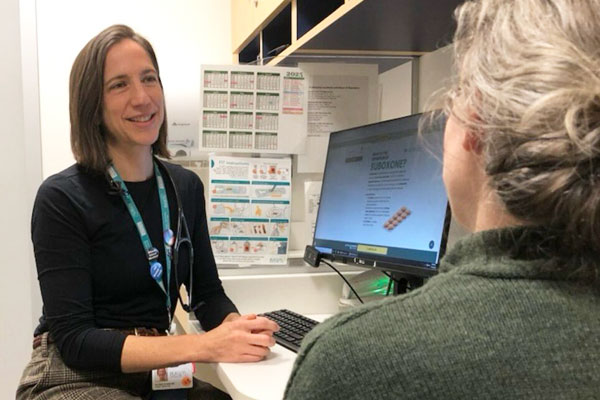
When I started my first job in rural Wisconsin, I practiced the traditional full-spectrum family medicine model. But the community had a growing need for treatment of OUD. As I began caring for those patients, I found the challenge both humbling and intellectually engaging. I wanted to better understand how to help people achieve their goals for recovery and how to create systems that make it easier to enter and stay in treatment. I’m a health services researcher, which means I study the delivery of care — describing what kinds of care people receive, who receives it, and what the outcomes are. Much of this involves analyzing large quantitative datasets, including administrative claims data and clinical information from electronic health records. These data help us estimate relationships between early aspects of care — such as like patient demographics, medication patterns, or co-occurring conditions — and long-term treatment outcomes.