


AUDIO – IT’S AN ILLNESS NOT A CRIME –
Jan. 23, 2026 – “Recovery starts with keeping people alive long enough to get help,” Nelson said. As lawmakers prepare to make those funding decisions, they are also considering new treatment options. The House passed legislation allowing state-regulated clinical trials of Ibogaine, a psychedelic drug researchers are studying as a potential treatment for severe and treatment-resistant addiction. “Working alongside people in treatment and recovery has reinforced that substance use disorder is a medical condition and that recovery looks different for every individual,” Foster said. “Nobody’s path is the same.” … But speakers stressed that expanded treatment access alone does not undo the harm caused by incarceration and limited mental health care.
Esther Pilgrim, a nurse, described watching her daughter cycle through overdose, incarceration and relapse.
“She went to prison. She came back more broken, y’all,” Pilgrim said. “She has night terrors now. Prison does not work. I know people want to send them there, but it does not. They’re not criminals.”
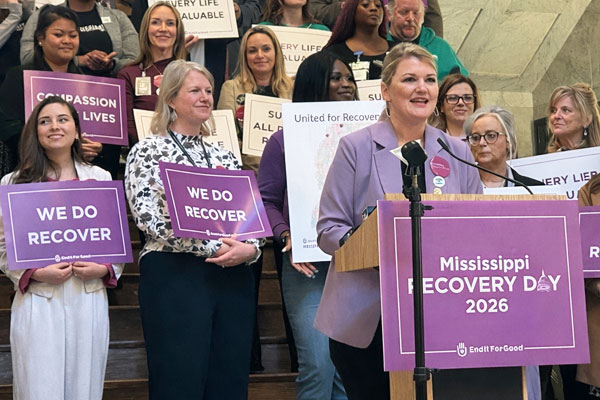
Several speakers emphasized that addiction affects entire families, not just individuals, and argued that recovery policy must reflect that reality. Advocates urged lawmakers to direct opioid settlement dollars toward long-term recovery housing, mental health services and family support, rather than short-term or punitive approaches.
As lawmakers prepare to make those funding decisions, they are also considering new treatment options. This week, the House passed legislation allowing state-regulated clinical trials of Ibogaine, a psychedelic drug researchers are studying as a potential treatment for severe and treatment-resistant addiction.
Christina Dent, founder of End It For Good, a health advocacy group that organized the event, framed the bill as part of a broader effort to expand the range of evidence-based options available in Mississippi, particularly for people who have not responded to traditional treatments.